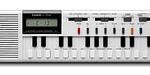
The VL-1 featured a small LCD display capable of displaying 8 characters. This was primarily used for the calculator function, but also displayed notes played. As well as this, the VL-1 also had changeable tone and balance, basic tempo settings and a real-time monophonic music sequencer, which could play back up to 99 notes. There were also 10 pre-loaded rhythms which utilized just three basic drum sounds.
The VL-1 was the first instrument of Casio's VL-Tone product line, and is sometimes referred to as the VL-Tone. It combined a calculator, synthesizer, and sequencer. VL-1 is notable for its kitsch value among electronic musicians, due to its cheap construction and its unrealistic, uniquely low-fidelity sounds.
SGD 18.00 |
• • •


Using corn crop residue to make ethanol and other biofuels reduces soil carbon and can generate more greenhouse gases than gasoline, according to a study published today in the journal Nature Climate Change. The findings by a University of Nebraska-Lincoln team of researchers cast doubt on whether corn residue can be used to meet federal mandates to ramp up ethanol production and reduce greenhouse gas emissions.
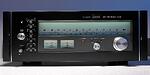
The FM/AM tuner which threw in the outstanding circuitry technology and the material selected carefully in order to pursue the receiving performance as a tuner thoroughly in order to perform the reception stabilized also in all radio-wave statuses, and to reconcile an audio performance simultaneously.
A frequency linear-line type FM 5-unit variable condenser, the three low noise dual gates MOS FET, and one transistor are used for a front end part. Furthermore, the antenna attenuator switchpoint is also carried and the reception where the distance-reception region and the close range of the strong electric field were also stabilized is enabled.
The receiving band switching is carried in the IF section, and tone-quality serious consideration and receiving performance serious consideration are reconciled.
Two steps of flat delay characteristics 6 pole block filters are adopted at the time of the wide band focused on a tone quality, and the narrow-band 4 pole ceramics filter is used for the reception excellent in adjacency stonewalling exclusion capacity at the time of a narrow-band.
The PLL (phase locked loop) scheme which excelled [ section / the super-wide band ratio detection circuitry and / MPX ] in the differential demodulator circuit and the phase response is adopted. Thereby, over a large band, a linearity is good and makes possible the low distortion equivalent to an Integrated Amplifier.
The auto noise cancellar of photocoupler adoption is carried, at the time of a weak signal input, with the signal level, the amount of blends to right and left is changed automatically, and a noise is canceled. Thereby, the performance in use on Hearing impression is improving.
The ceramics filter with a double-tuned circuit, and two-element two coils etc. is adopted as AM tuner part for a tone quality or the improvement in selectivity.
The stabilizing supply by ±2 good power source of a regulation is adopted as each block stage, and the stable operation and tone-quality modification are aimed at.
The testing oscillator for a sound recording which can perform a proper level setups with the deck easily is built in.
As for a signal, 1kHz and level of -10dB at the time of an FM100% modulation are obtained. Moreover, this tone is an enable also at a phase checking and a right-and-left balance coordination of a speaker.
In order to avoid a beat with the deck, the low pass filter with a sharp property is carried.
The output-terminal only for a sound recording is carried.
Signal meter and a center tuning meter are adopted.
A flexible type AM bar antenna, the multipath observation termination, FM detection output-terminal, the 75ohmF type FM antenna termination, and the Output-voltage regulating function are carried.
The glass dial side without the fly wheel made from a heavy weight class sintered alloy or secular change is adopted.
• • •

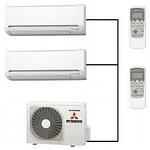
Aircon System 5 -General Service Booking
SGD 15.00 |
• • •
Aircon System 4 -General Service Booking
SGD 12.00 |
• • •
Aircon System 2 -General Service Booking
SGD 6.00 |
• • •

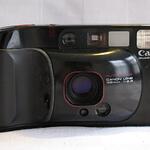
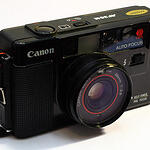
A 1986 model from Canon's phenomenally successful Sure Shot range, this compact 35mm film camera - known as the Top Shot in continental Europe and Autoboy 3 in Japan - was voted European Camera of the Year for putting some very advanced features into an ergonomic package at a reasonable price. The slanted hand grip means the viewfinder can be held flush with the eye as fingers and thumbs aren't in the way. It's also comfortable for shooting one- or two-handed. A special feature is the tilting foot on the bottom of the camera, which allows you to place the camera on the floor while shooting upwards at an angle. One minor annoyance with this camera is that the battery compartment does not pop open normally, but is screwed down, so a mini-screwdriver is needed to replace the 2CR5. Another is that the flash disable button is a tiny rubber button on the bottom of the camera that must be held down. This is quite difficult to do quickly.
The successor to the Autoboy 2 and the next-generation, fully automatic 35mm AF compact camera.
The camera grip is slanted so you don't have to squint. The camera's curving and rounded exterior was well received. The camera won many awards including the Good Design Award from the Ministry of International Trade and Industry. In 1986, it was selected as the European Camera of the Year.
For active autofocusing, the camera uses a triangulation system with a near-infrared beam. An electronically-controlled programmed shutter is used for fully automatic program EE. The metering range is EV 6 (f/2.8 at 1/8 sec.) to EV 17 (f/1.6 at 1/500 sec.).
SGD 3.89 |
• • •

目标对象:0-6岁儿童
快乐启蒙
Book1- 聪明宝贝启蒙系列——识字
Book2- 聪明宝贝启蒙系列——认物
SGD 174.30 |
• • •
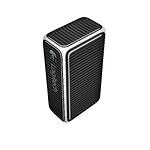
We can’t wait to hear what you think about the new Logitech Cube. With its unique design, it redefines the computer mouse with a shape that fits in your hand and will fascinate your friends and family, colleagues and clients.
Thanks to its pocket-perfect size, the Logitech Cube fits in your jacket pocket, purse or carry-on bag. Whether you’re taking your computer from the living room to the kitchen or from your desk to a conference room across the globe, this mouse travels light.
While colleagues and friends will be impressed by its tiny size, the Logitech Cube offers even more than a unique design.
For starters, the Cube effortlessly becomes a presenter when you need it – making you look like a star at work. Lift it in the air and your mouse is in presenter mode. Click the Cube to advance your deck to the next slide; turn the Cube over in your hand and click it again to go to a previous slide.
And thanks to Logitech Flow Scroll software it’s easier than ever to read your Facebook page, shop on Amazon® or scroll through Google™ searches. Simply slide your finger along the main panel of the mouse and you’ll be impressed by the smooth, fluid motions – giving you an experience similar to scrolling on your touchscreen smartphone.
We’re also proud to announce the Logitech Cube is an International CES Innovations 2012 Design and Engineering Awards Honoree and will be featured in the Innovations Design and Engineering Showcase at the 2012 International CES, which runs Jan. 10-13, 2012 in Las Vegas.
We hope you love the Cube as much as we do. Tell us what you think!
SGD 26.55 |
• • •
The Canon AF35M, nicknamed the Autoboy by Canon Japan or the Sure Shot by Canon USA, was Canon Inc.'s first autofocus 35mm lens-shutter compact camera.[1][2] It was launched in November 1979[1] and received the Japanese Ministry of International Trade and Industry's 1980 Good Design Award in September 1980.[2] It proved successful among similar cameras from the competition and sold well; production reached 110,000 per month by the second half of 1981.[2] It was partly supplanted by 1981's higher-specified AF35ML and wholly replaced by 1983's AF35M II.
The active autofocus system used a near-infrared emitting diode and a pin photo diode to determine the subject position by triangulation in a manner similar to a coincident-image rangefinder. This meant that the system was independent of ambient light levels and achieved a high degree of accuracy; however, it could be fooled by glass (which is not transparent to infrared radiation). The autofocus area was marked on the reverse-Galilean optical viewfinder, which also had projected framelines, zone focusing marks for near, medium and far (lit to indicate the approximate area the autofocus had selected), parallax correction marks, and battery-check and camera-shake warning LEDs. Viewfinder magnification was 0.5× and coverage was 85% of the full 135 frame by area.
The lens was of 38 mm focal length and with a maximum aperture of f/2.8. A ring around the lens optic itself was used to set the film speed (ISO 25 to 400), which was indicated on a small window on the front of the lens assembly; also there, but below the lens optic itself, was the cadmium sulfide (CdS) photoresistor for the light meter. The location of this, inside the filter ring of the lens, meant that the meter would function accurately even with filters fitted to the lens.
Film transport was fully automatic in both directions, but the camera was not fitted with Canon's Quick Load feature; film still had to be manually threaded to the take-up spool.
An integral flash was fitted; this retracted into the top of the camera on the left (from the user's perspective) and was manually extended via releasing a catch on the camera's front. The unit had a guide number of 14 (at ISO 100 in meters) and featured auto-exposure with the camera's light meter as well as supporting fill flash. Also on the front was a self-timer control.
All electronic functions drew power from two AA batteries.
SGD 4.89 |
• • •
Aircon System 3 -General Service Booking
SGD 9.00 |
• • •
 Home
Home Malaysia
  Singapore
  Back to top