
201200001K
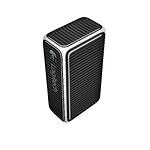
Docking stations are one of the most plentiful storage solutions on the market. With nearly every vendor having such a solution, we have seen a shift from standard single or two bay solutions to docks that now have additional features such as cloning capabilities, and now with the latest from Enermax, charging capabilities for our smart devices.
The Enermax EB311SC is a two-bay dock solution coming from the Ultrabox line-up of solutions. This storage device features both 2.5" and 3.5" compatibility along with USB 3.0 connectivity. Additional features include a one button clone function allowing quick duplication of a your drives without the need for a PC. As I stated in the introduction, this dock also enables users to charge their smart devices via two super charge ports located on the back. PC compatibility starts with Windows 7, 8 and 10 and includes Mac OS 9+.
MSRP of the Enermax Ultrabox EB311SC is listed at $64.99 with a one-year warranty.
Read more at http://www.tweaktown.com/reviews/7203/enermax-ultrabox-eb311sc-storage-docking-station-review/index.html

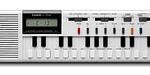
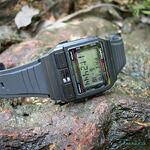
The VL-1 featured a small LCD display capable of displaying 8 characters. This was primarily used for the calculator function, but also displayed notes played. As well as this, the VL-1 also had changeable tone and balance, basic tempo settings and a real-time monophonic music sequencer, which could play back up to 99 notes. There were also 10 pre-loaded rhythms which utilized just three basic drum sounds.
The VL-1 was the first instrument of Casio's VL-Tone product line, and is sometimes referred to as the VL-Tone. It combined a calculator, synthesizer, and sequencer. VL-1 is notable for its kitsch value among electronic musicians, due to its cheap construction and its unrealistic, uniquely low-fidelity sounds.
SGD 18.00 |
• • •


Japan’s Plan for Centimeter-Resolution GPS
A $1.2 billion system of satellites and ground stations would give unprecedented accuracy
A stranger to Tokyo could easily get lost in its urban canyons. And GPS navigation, stymied by low resolution and a blocked view of the sky, might not be much help. But that won’t be the case after 2018. Engineers at Tokyo-based Mitsubishi Electric Corp. report that they’re on track to start up the first commercial, nationwide, centimeter-scale satellite positioning technology. As well as spot-on navigation, the technology will also usher in a variety of innovative new applications, its proponents say.
Named Quazi-Zenith Satellite System (QZSS), it is designed to augment Japan’s use of the U.S.-operated Global Positioning System (GPS) satellite service. By precisely correcting GPS signal errors, QZSS can provide more accurate and reliable positioning, navigation, and timing services.
Today’s GPS receivers track the distance to four or more GPS satellites to calculate the receiver’s position. But because of the various errors inherent in the GPS system, location can be off by several meters. In using the data from QZSS to correct the measured distance from each satellite, the accuracy of the calculated position is narrowed down to the centimeter scale.
“GPS positioning can be off by as much as 10 meters due to various kinds of errors,” says Yuki Sato, a research engineer in Mitsubishi Electric’s Advanced Technology R&D Center, the prime contractor for the space portion of the project. “And in Japan, with all its mountains and skyscrapers blocking out GPS signals, positioning is not possible in some city and country locations,” he adds.
The Japan Aerospace Exploration Agency (JAXA) got the project under way with the launch of QZS-1 in September 2010. Three additional satellites are slated to be in place by the end of 2017, with a further three launches expected sometime later to form a constellation of seven satellites—enough for sustainable operation and some redundancy. The government has budgeted about US $500 million for the three new satellites, which are to be supplied by Mitsubishi. It also apportioned an additional $1.2 billion for the ground component of the project, which is made up of 1200 precisely surveyed reference stations. That part’s being developed and operated by Quazi-Zenith Satellite System Services, a private company established for this purpose.
The four satellites will follow an orbit that, from the perspective of a person in Japan, traces an asymmetrical figure eight in the sky. While the orbit extends as far south as Australia at its widest arc, it is designed to narrow its path over Japan so that at least one satellite is always in view high in the sky—hence the name quasi-zenith. This will enable users in even the shadowed urban canyons of Tokyo to receive the system’s error-correcting signals.
“Errors can be caused, for example, by the satellite’s atomic clock, orbital shift, and by Earth’s atmosphere, especially the ionosphere, which can bend the signal, reducing its speed,” says Sato.
To correct the errors, a master control center compares the satellite’s signals received by the reference stations with the distance between the stations and the satellite’s predicted location. These corrected components are compressed from an overall 2-megabit-per-second data rate to 2 kilobits per second and transmitted to the satellite, which then broadcasts them to users’ receivers.
“This is all done in real time, so compression is really important,” says Ryoichiro Yasumitsu, a deputy chief manager in Mitsubishi’s Space Systems Division. “It would take too long to transmit the original data.” Compression also means a practical-size antenna can be employed in the user’s receiver. In QZS-1 trial tests, Yasumitsu notes that the average accuracy is about 1.3 centimeters horizontally and 2.9 cm vertically.
This centimeter-scale precision promises to usher in a number of creative, or at least greatly improved, applications beyond car and personal navigation. Besides pointing out obvious uses like mapping and land surveying, Sam Pullen, a senior research engineer in the department of aeronautics and astronautics at Stanford, says precision farming and autonomous tractor operations will be big applications. “Unmanned aerial vehicles and autonomous vehicles in general,” he adds, “will also find centimeter-level positioning valuable in maintaining and assuring separation from other vehicles and fixed obstacles.”
In addition, the Japanese government plans to use the service to broadcast short warning messages in times of disaster, when ground-based communication systems may be damaged. As instructed by the government, the control center will transmit a brief warning message to the QZSS satellite, which will then broadcast it to users on the same frequency.
Given the range of promised applications and relatively low cost of the Japanese system compared with the €5 billion ($6.9 billion) budgeted for the EU’s Galileo, for instance, other nations will be watching and waiting to see if QZSS achieves its goals.
• • •
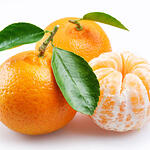
Present this coupon to the shop cashier to get 10% discount on fresh mandarin orange.
• • •
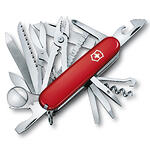
34 Functions, Contains Large Blade, Small Blade, Scissors, Pliers With Wire Cutter, Wood Saw, Fish Scaler With Hook Disgorger & Ruler, Metal Saw With Metal File & Nail Cleaner, Nail File, Magnifying Glass, Reamer With Sewing Eye, Phillips Screwdriver, Corkscrew, Hook, Wood Chisel, Fine Screwdriver, Mini Screwdriver, Can Opener With Small Screwdriver, Bottle Opener With Large Screwdriver & Wire Stripper and lots more...
From fish scaler to wire cutters, the SwissChamp has a tool for nearly any job without adding significant bulk to your gear – making it the perfect companion for virtually anyone.Sometimes called a toolbox for your pocket, the 3 1/2" SwissChamp packs an impressive 33 implements and is the daddy of Swiss Army Knives. Despite its immense number of implements, the Swiss Champ still fits in your pocket for use anywhere from the great outdoors to workbench at home. The implements are constructed of durable stainless steel, carry a lifetime warranty and are Swiss-Made, which means they have been built to last. Available in Red Sapphire.
SGD 26.95 |
• • •
Magnum is an ice cream brand owned by the British/Dutch Unilever company and sold as part of the Heartbrand line of products in most countries.
The ice cream today known as Magnum was launched in Sweden in January 1989 as an upmarket ice cream for the existing Nogger brand, and it was originally manufactured by Frisko in Denmark. The original Magnum (later rebranded as Magnum Classic) consisted of a thick bar of vanilla ice cream on a stick, with real chocolate coating. As there was no real chocolate which could stand the temperature of −40 degrees Celsius, an ad hoc chocolate was developed by Belgian Callebaut. The original Magnum had a weight of 86 grams and a volume of 120 mL).
The company also started selling Magnum ice cream cones in 1994 and an ice cream sandwich in 2002.
SGD 3.50 |
• • •
Test Variation Highlight
Test Variation Description
A top Malaysian finance ministry official is set to be appointed central bank governor to replace Zeti Akhtar Aziz next week, the Wall Street Journal reported, citing unidentified sources.
Mohd Irwan Serigar Abdullah will replace Zeti, who steps down as Bank Negara Malaysia (BNM) governor on April 30 after 16 years at the helm, the newspaper said.
When contacted by Reuters, Mohd Irwan said in a text message he did not know if he had been shortlisted for the role.
A spokesman at the Prime Minister's Office told Reuters he would not comment on speculation. A central bank spokeswoman said the bank could not comment on the matter.
Zeti is widely respected, and credited for pushing reforms and sound policies, as well as protecting the independence of the central bank. There has been no official word on her replacement.
Market participants feared political interference in the appointment by Prime Minister Najib Razak's government especially after BNM insisted that state-owned 1Malaysia Development Berhad (1MDB) be charged for fiscal mismanagement. .
Mohd Irwan was one of the candidates short-listed for the job along with deputy central bank governor Muhammad Ibrahim, the minister in the Prime Minister's Department in charge of Economic Planning Abdul Wahid Omar and the ambassador to the United States Awang Adek Hussin, Reuters reported in February.
A career civil servant, Mohd Irwan is Treasury secretary-general at the Finance Ministry, which is headed by Prime Minister Najib. He is also a member of the board of advisers for 1MDB.
SGD 10.00+ |
• • •
We can’t wait to hear what you think about the new Logitech Cube. With its unique design, it redefines the computer mouse with a shape that fits in your hand and will fascinate your friends and family, colleagues and clients.
Thanks to its pocket-perfect size, the Logitech Cube fits in your jacket pocket, purse or carry-on bag. Whether you’re taking your computer from the living room to the kitchen or from your desk to a conference room across the globe, this mouse travels light.
While colleagues and friends will be impressed by its tiny size, the Logitech Cube offers even more than a unique design.
For starters, the Cube effortlessly becomes a presenter when you need it – making you look like a star at work. Lift it in the air and your mouse is in presenter mode. Click the Cube to advance your deck to the next slide; turn the Cube over in your hand and click it again to go to a previous slide.
And thanks to Logitech Flow Scroll software it’s easier than ever to read your Facebook page, shop on Amazon® or scroll through Google™ searches. Simply slide your finger along the main panel of the mouse and you’ll be impressed by the smooth, fluid motions – giving you an experience similar to scrolling on your touchscreen smartphone.
We’re also proud to announce the Logitech Cube is an International CES Innovations 2012 Design and Engineering Awards Honoree and will be featured in the Innovations Design and Engineering Showcase at the 2012 International CES, which runs Jan. 10-13, 2012 in Las Vegas.
We hope you love the Cube as much as we do. Tell us what you think!
SGD 26.55 |
• • •
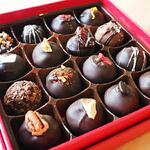
Candy, also called sweets or lollies, is a confection that features sugar as a principal ingredient. The category, called sugar confectionery, encompasses any sweet confection, including chocolate, chewing gum, and sugar candy. Vegetables, fruit, or nuts which have been glazed and coated with sugar are said to be candied.
Physically, candy is characterized by the use of a significant amount of sugar, or, in the case of sugar-free candies, by the presence of sugar substitutes. Unlike a cake or loaf of bread that would be shared among many people, candies are usually made in smaller pieces. However, the definition of candy also depends upon how people treat the food. Unlike sweet pastries served for a dessert course at the end of a meal, candies are normally eaten casually, often with the fingers, as a snack between meals. Each culture has its own ideas of what constitutes candy rather than dessert. The same food may be a candy in one culture and a dessert in another.
Before sugar was readily available, candy was made from honey. Honey was used in Ancient China, Middle East, Egypt, Greece and the Roman Empire to coat fruits and flowers to preserve them or to create forms of candy. Candy is still served in this form today, though now it is more typically seen as a type of garnish.
Candy was originally a form of medicine, either used to calm the digestive system or cool a sore throat. In the Middle Ages candy appeared on the tables of only the most wealthy at first. At that time it began as a combination of spices and sugar that was used as an aid to digestive problems. Digestive problems were very common during this time due to the constant consumption of food that was neither fresh nor well balanced. Banquet hosts would typically serve these types of 'candies' at banquets for their guests. One of these candies, sometimes referred to as a 'chamber spice', was made with cloves, ginger, aniseed, juniper berries, almonds and pine kernels dipped in melted sugar.
The Middle English word candy began to be used in the late 13th century.
SGD 5.00 |
• • •
The tulip is a perennial, bulbous plant with showy flowers in the genus Tulipa, of which around 75 wild species are currently accepted and which belongs to the family Liliaceae. The genus's native range extends west to the Iberian Peninsula, through North Africa to Greece, the Balkans, Turkey, throughout the Levant (Syria, Israel, Lebanon, Jordan) and Iran, North to Ukraine, southern Siberia and Mongolia, and east to the Northwest of China. The tulip's centre of diversity is in the Pamir, Hindu Kush, and Tien Shan mountains. It is a typical element of steppe and winter-rain Mediterranean vegetation. A number of species and many hybrid cultivars are grown in gardens, as potted plants, or as cut flowers.
Tulips are spring-blooming perennials that grow from bulbs. Depending on the species, tulip plants are between 4 inches (10 cm) and 28 inches (71 cm) high. The tulip's large flowers usually bloom on scapes with leaves in a rosette at ground level and a single flowering stalk arising from amongst the leaves.Tulip stems have few leaves. Larger species tend to have multiple leaves. Plants typically have two to six leaves, some species up to 12. The tulip's leaf is strap-shaped, with a waxy coating, and the leaves are alternately arranged on the stem; these fleshy blades are often bluish green in color. Most tulips produce only one flower per stem, but a few species bear multiple flowers on their scapes (e.g. Tulipa turkestanica). The generally cup or star-shaped tulip flower has three petals and three sepals, which are often termed tepals because they are nearly identical. These six tepals are often marked on the interior surface near the bases with darker colorings. Tulip flowers come in a wide variety of colors, except pure blue (several tulips with "blue" in the name have a faint violet hue).
The flowers have six distinct, basifixed stamens with filaments shorter than the tepals. Each stigma has three distinct lobes, and the ovaries are superior, with three chambers. The tulip's seed is a capsule with a leathery covering and an ellipsoid to globe shape. Each capsule contains numerous flat, disc-shaped seeds in two rows per chamber. These light to dark brown seeds have very thin seed coats and endosperm that does not normally fill the entire seed.
• • •
Using corn crop residue to make ethanol and other biofuels reduces soil carbon and can generate more greenhouse gases than gasoline, according to a study published today in the journal Nature Climate Change. The findings by a University of Nebraska-Lincoln team of researchers cast doubt on whether corn residue can be used to meet federal mandates to ramp up ethanol production and reduce greenhouse gas emissions.
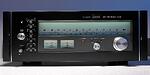
The FM/AM tuner which threw in the outstanding circuitry technology and the material selected carefully in order to pursue the receiving performance as a tuner thoroughly in order to perform the reception stabilized also in all radio-wave statuses, and to reconcile an audio performance simultaneously.
A frequency linear-line type FM 5-unit variable condenser, the three low noise dual gates MOS FET, and one transistor are used for a front end part. Furthermore, the antenna attenuator switchpoint is also carried and the reception where the distance-reception region and the close range of the strong electric field were also stabilized is enabled.
The receiving band switching is carried in the IF section, and tone-quality serious consideration and receiving performance serious consideration are reconciled.
Two steps of flat delay characteristics 6 pole block filters are adopted at the time of the wide band focused on a tone quality, and the narrow-band 4 pole ceramics filter is used for the reception excellent in adjacency stonewalling exclusion capacity at the time of a narrow-band.
The PLL (phase locked loop) scheme which excelled [ section / the super-wide band ratio detection circuitry and / MPX ] in the differential demodulator circuit and the phase response is adopted. Thereby, over a large band, a linearity is good and makes possible the low distortion equivalent to an Integrated Amplifier.
The auto noise cancellar of photocoupler adoption is carried, at the time of a weak signal input, with the signal level, the amount of blends to right and left is changed automatically, and a noise is canceled. Thereby, the performance in use on Hearing impression is improving.
The ceramics filter with a double-tuned circuit, and two-element two coils etc. is adopted as AM tuner part for a tone quality or the improvement in selectivity.
The stabilizing supply by ±2 good power source of a regulation is adopted as each block stage, and the stable operation and tone-quality modification are aimed at.
The testing oscillator for a sound recording which can perform a proper level setups with the deck easily is built in.
As for a signal, 1kHz and level of -10dB at the time of an FM100% modulation are obtained. Moreover, this tone is an enable also at a phase checking and a right-and-left balance coordination of a speaker.
In order to avoid a beat with the deck, the low pass filter with a sharp property is carried.
The output-terminal only for a sound recording is carried.
Signal meter and a center tuning meter are adopted.
A flexible type AM bar antenna, the multipath observation termination, FM detection output-terminal, the 75ohmF type FM antenna termination, and the Output-voltage regulating function are carried.
The glass dial side without the fly wheel made from a heavy weight class sintered alloy or secular change is adopted.
• • •
 Home
Home Malaysia
  Singapore
  Back to top